Façade Cladding Materials — What Options Are Available and How Do You Choose the Right One?
A building façade is more than just its visual appearance. It is an important part of the building envelope, constantly exposed to sunlight, rain, wind, temperature changes and other environmental conditions. For this reason, choosing a façade cladding material involves much more than selecting a colour or design. Durability, weight, maintenance requirements, energy efficiency, fire safety and compatibility with the chosen façade system must all be considered.
Modern architecture uses a wide range of materials for façade cladding, including different types of façade panels, glass, aluminium and other materials. The right choice always depends on the building itself, its intended use, architectural concept and technical requirements.
Aluminium Composite Panels
Aluminium composite panels are among the most widely used materials for modern façade cladding. They consist of outer aluminium layers with a core material positioned between them.
In Georgia, aluminium composite panels are also commonly referred to as Alucobond. However, Alucobond is a specific trademark and represents only one brand of aluminium composite panel.
One of the main advantages of composite panels is their fabrication flexibility. Panels can be cut, bent and formed into different shapes, making them suitable for both large flat surfaces and complex architectural forms or individual façade elements.
A wide variety of colours, textures and surface finishes also allows composite panels to be adapted to different architectural styles.
When selecting a composite panel, particular attention should be paid to its technical characteristics, including overall panel thickness, aluminium skin thickness, coating type and the fire classification of the core. Not all composite panels therefore have the same properties or are suitable for the same applications.
At Luminor Group, we use aluminium composite panels both for complete building façades and for individual architectural elements and areas.
Aluminium Façade Panels
In addition to composite panels, various types of aluminium façade panels are widely used in modern architecture.
Aluminium panels combine relatively low weight with corrosion resistance and extensive fabrication possibilities. They can be used to create large, uniform surfaces as well as façades with more complex geometries.
By varying the shape, dimensions, colour and arrangement of aluminium panels, completely different visual effects can be achieved. This makes aluminium panel systems particularly suitable for projects with distinctive architectural concepts.
Perforated Aluminium Panels
Perforated aluminium façades allow the material itself to become an integral part of the architectural design.
Creating openings of different sizes, shapes and patterns in aluminium sheets or panels makes it possible to produce unique ornaments, textures and visual effects.
Perforated panels can be incorporated into the main building façade or used as a decorative outer layer, solar shading element or distinctive architectural feature.
Carefully designed perforation also gives architects greater control over façade transparency, natural light and the building's visual relationship with its surroundings.
Glass — An Essential Material in Modern Façades
Glass is one of the most important façade materials used in contemporary commercial, residential and public buildings.
Glass façades make it possible to maximise natural daylight inside a building while creating a lighter, more transparent architectural appearance.
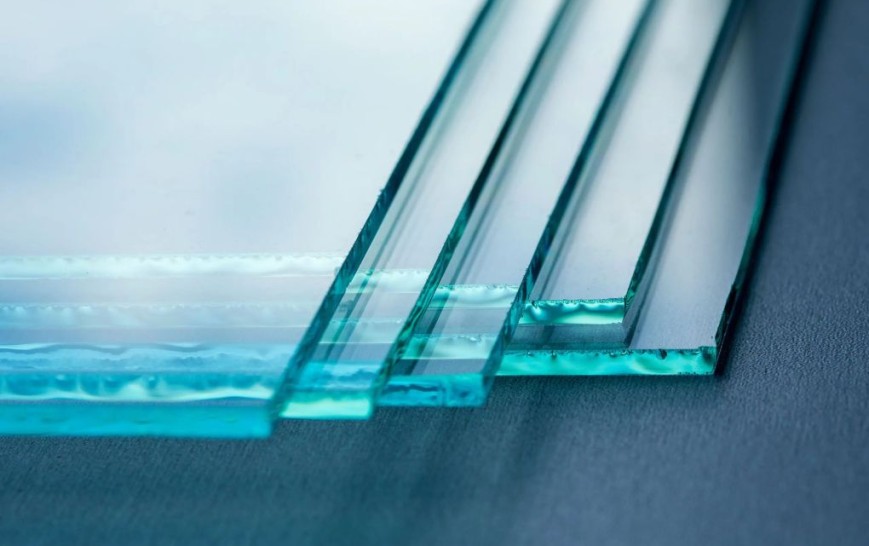
However, façade glass should not be selected based on appearance alone. Depending on project requirements, different types of glass may be used, including heat-treated, laminated, Low-E, solar control and other functional glazing solutions.
The final choice of glass depends on requirements related to safety, thermal insulation, solar control, acoustics and other performance criteria.
Glass can be incorporated into various types of aluminium façade systems. A structural silicone glazed façade, for example, can create an almost completely glazed exterior appearance because the supporting aluminium profiles are largely concealed from the outside.
For different architectural and engineering requirements, capped, semi-capped, omega-capped, cassette structural silicone and other aluminium façade systems can also be used.
Spider Glazing Façades
Another distinctive solution for glass façades is the spider glazing system.
In these systems, glass elements are secured using specialised point-fixing components, reducing the number of visible structural elements and creating a highly transparent glazed surface.
Spider glazing systems are particularly suitable for projects where the architectural concept calls for large glazed areas and a minimalist appearance.
Decorative Façade Materials
Façade cladding does not always serve a purely protective function. In modern architecture, it often becomes one of the defining elements of a building's identity.
Decorative façades can incorporate composite panels, perforated and laser-cut metal, aluminium panels and other custom-fabricated elements.
These solutions are particularly useful when a project requires unconventional shapes, three-dimensional elements, distinctive textures or the realisation of a specific architectural concept.
Other Façade Cladding Materials
Depending on the building's intended use and the technical requirements of the project, other materials can also be used for façade cladding, including sandwich panels and cement-based boards such as Aquapanel.
Each material has different characteristics and applications, which means that comparing them solely on appearance would be misleading. One project may prioritise low weight, another thermal insulation, while another may place greater emphasis on fire safety, architectural flexibility or operating conditions.
How Do You Choose the Right Façade Cladding Material?
Selecting a façade material should begin with an analysis of the project's requirements.
The first factors to consider are the building's purpose and scale. A residential complex, hotel, business centre, retail development and public building may each have very different requirements.
The architectural concept is equally important. The project may call for a fully glazed façade, panel cladding, a perforated surface or a combination of several materials.
Environmental conditions must then be evaluated, including wind loads, precipitation, solar exposure, temperature fluctuations and other factors related to the building's location.
Energy efficiency should also be considered. The façade system, thermal insulation, aluminium profiles and glazing specifications are interconnected components that collectively influence the building's overall energy performance.
Particular attention should be paid to fire safety and the appropriate material classification, especially for multi-storey and public buildings.
Finally, it is important to consider not only the material itself, but also its proper engineering, fabrication and installation. Even a high-quality material cannot deliver the desired performance if the façade system is not selected and executed according to the project's requirements.
Note - Façade Materials and Systems Should Be Selected Together
Choosing a façade cladding material is only the first step. A composite panel, aluminium panel or glass achieves the intended result only when integrated with the appropriate engineered façade system.
For this reason, the façade material and system should be selected together for each individual project.
At Luminor Group, we develop project-specific technical details, select appropriate systems and materials, fabricate the required structures in our own facility and carry out installation with our own team.
Our façade solutions include a wide range of systems — from decorative and perforated aluminium façades to composite and aluminium panel systems, structural silicone glazing, spider glazing, capped, semi-capped, omega-capped, cassette structural silicone and mechanically fixed façade systems.
When selecting a façade, therefore, the main question should not simply be:
“Which material is better?”
The right question is:
Which material and façade system best meet the architectural, technical and operational requirements of the specific project?
- Share


Similar news
Our
customers
Hear from our customers about their experiences

What sets Luminor apart is their ability to offer solutions and empower you, despite the challenges.”

FAQ
You can find answers to the most frequently asked questions easily and in detail here.
We are a company specializing in the production and installation of architecturally sophisticated aluminum facades, doors, windows, railings and roofing systems. Our own factory, experienced engineering and installation team allow us to turn projects of various scales and complexity into reality.
For each project, we individually develop technical components and select appropriate systems and materials. Based on the specifics of the project, we manufacture the necessary structures in our own factory, and our team ensures their delivery and professional installation.
Yes. It is possible to use both the full service and purchase individual products and materials without installation services.
Yes, our own specialized team ensures professional installation of all structures.